

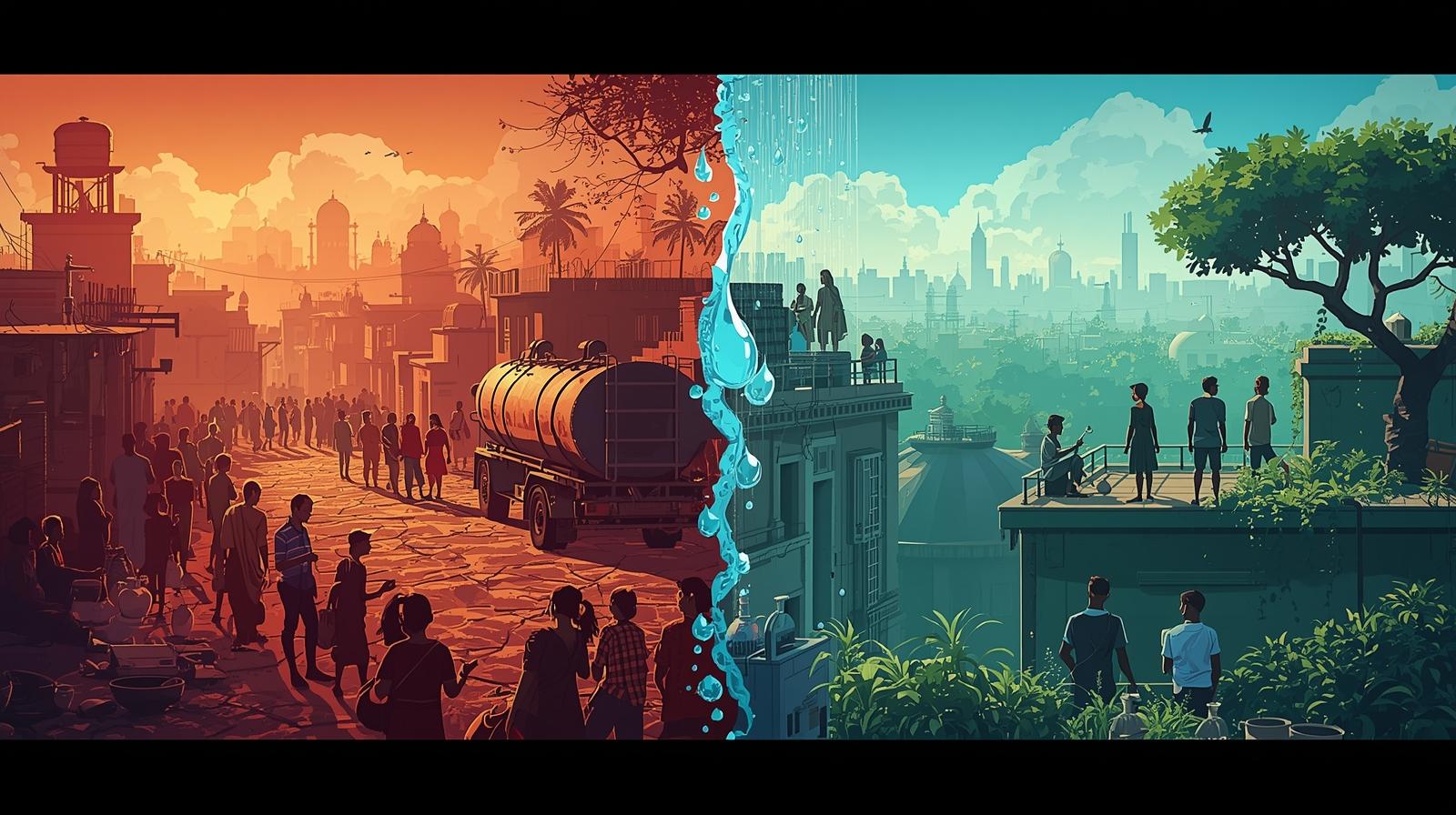
It’s a hot summer afternoon in Delhi, and the faucets have dried up. Ring a bell? If you’re an Indian, chances are you’ve lived through this situation more than once. Water shortage is no longer some far-off threat – it’s on our doorstep, and honestly, it’s getting harder to ignore every year.
This is the bitter truth: India possesses close to 18% of the world’s population but only 4% of the world’s freshwater. That is a numerical issue that we can no longer ignore. Water conservation in India is not just an eco-friendly buzzword; it’s turning into a survival issue for millions of households in our multicultural country.
From Mumbai’s crowded streets to Rajasthan’s rural villages, every drop matters. Whether you’re a Bangalore college student concerned about the water supply to your hostel or a Punjab farmer seeing groundwater levels decreasing year by year, this crisis affects all of us. The silver lining? We’re not helpless. There are real, actionable steps we can all take to address this problem, and that is precisely what we are going to discuss together in this post.
What India’s Water Crisis Really Is
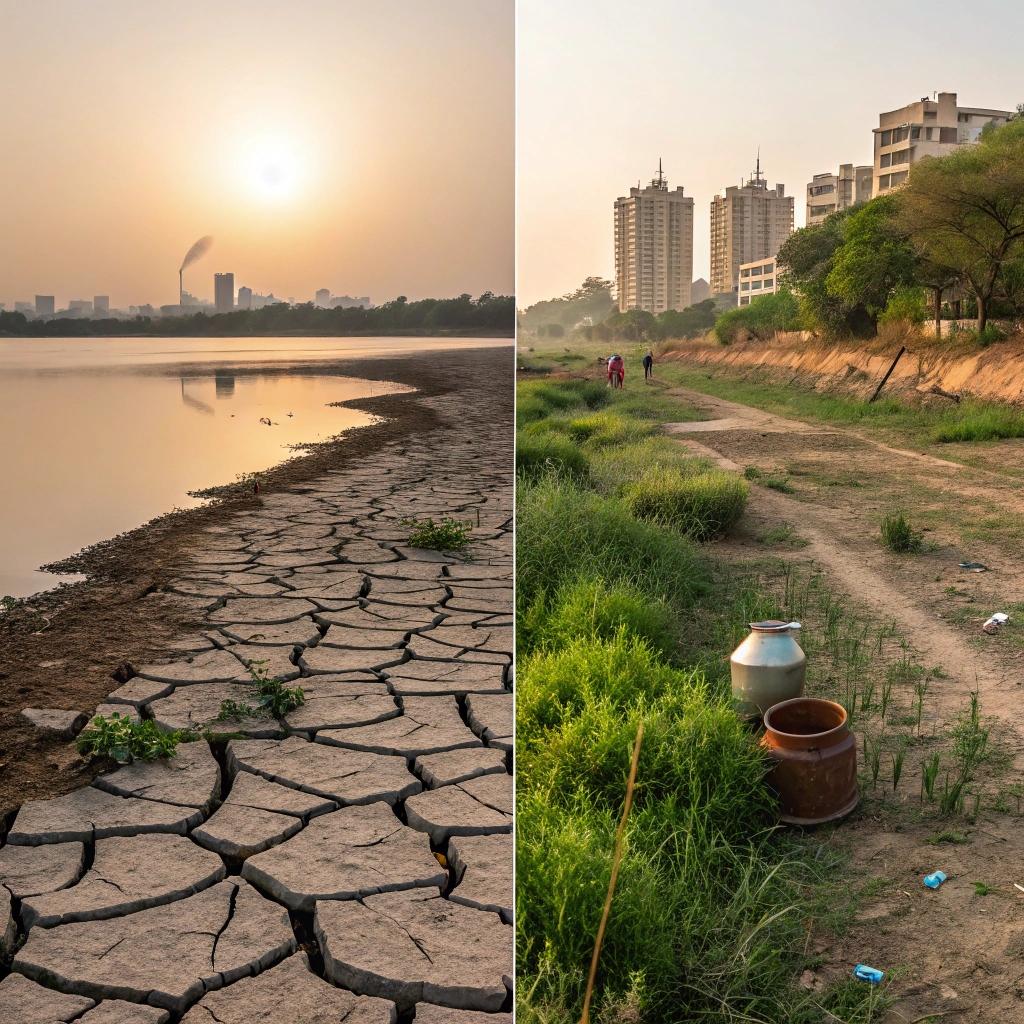
Let’s begin with some shocking facts that may cause you to think twice before leaving that tap on while brushing your teeth. Water conservation in India has become a matter of greater importance than ever before, with 21 of India’s major cities running out of groundwater by 2030. Chennai’s Day Zero in 2019 was not an isolated incident – it was a glimpse of what could be in store for many Indian cities if we do not act now.
The scenario is drastically different across our nation. While Kerala receives high volumes of rainfall during monsoons, the likes of Rajasthan struggle with perennial water scarcity. This difference makes water conservation activity in India even more challenging, necessitating region-specific solutions as opposed to a blanket approach.
What’s most alarming is our groundwater extraction rate. We’re taking water out quicker than it can be restored by nature. Imagine having a savings account where you’re spending money quicker than you’re putting it in – sooner or later, you’ll reach zero. That’s what’s happening with our underground water supplies in much of the country.
Traditional Wisdom Meets Modern Solutions

Here’s something lovely about our nation – we’ve never wasted water. Our forefathers knew the need for water conservation long before the world took notice. Gujarat’s stepwells, Tamil Nadu’s tank systems, and Rajasthan’s kunds were not mere architectural wonders; they were advanced water management techniques.
Rainwater harvesting in Rajasthan, for example, has been around for centuries. The ancient baolis and tankas harvested and stored rainwater during the short monsoon, supporting communities for long stretches of dry weather. These weren’t only practical – they were public spaces where people came together, showing how water conservation became part of the social fabric of society.
Today, institutions such as the Indian Institute of Soil and Water Conservation are striving to mix this ancient knowledge with new technology. They’re creating novel solutions that honor our heritage while solving issues that beset us today. It’s a case of having the best of two worlds – the insight of grandparents and the knowledge of the present.
Simple Steps, Big Impact: What You Can Do at Home
Now, let’s get to the good stuff – what you can do. And no, I’m not going to tell you to stop showering (though shorter showers would be a good thing!). The beauty of water savings is in little, steady steps that together create big impact.
Begin with the low-hanging fruit. Get rid of those dripping taps – that constant drip-drip isn’t just irritating, it’s wasteful. One dripping tap can waste more than 3,000 liters of water a year. That’s enough water to supply a four-person family for a few days! Putting aerators on your taps and low-flow showerheads can save up to 50% of water without sacrificing your experience.
One of my own favorites: the bucket challenge. No, not the ice bucket challenge, but the shower bucket challenge. Place a bucket in your shower to collect the cold water as you wait for it to get warm. You can use this water for plants, for cleaning, or to flush toilets. It’s surprising how much water you can save this way.
Rainwater harvesting does not call for a PhD in engineering. Even residents in apartments can harvest rain from balconies with simple containers. It is ideal water for plants and can really minimize your reliance on municipal supply in dry months.
Community Action: The Multiplier Effect
Individual effort is wonderful, but collective effort is where the real magic begins. Water conservation in India is such a gigantic task that it must be addressed through collective action. Consider holding water conservation drives at your local area, apartment complex, or office.
Several of India’s most successful water conservation initiatives have been community-led. Consider the case of Maharashtra villages that have changed from drought-ridden tracts to water-surplus zones by way of collective management of watersheds. They didn’t wait for government action – they took the initiative and did it themselves.
Schools and colleges can also make a big difference. Imagine all schools and colleges in India turning into water-saving centers, educating students not only about the theory but the practice of water conservation. The impact would be huge, with students carrying these behaviors home and impacting their families.
Save water campaigns in India have worked quite miraculously if they emphasize community participation instead of awareness alone. Knowing that water is crucial is not sufficient – citizens must be enabled to be a part of change.
Technology and Innovation: The Future is Here

Technology is transforming the way we conserve water, and India leads the pack in the change. Smart water meters that detect leaks in real time, mobile apps that monitor home water usage, and IoT sensors that efficiently optimize irrigation – no longer science fiction.
Drip irrigation systems, although not new, are growing to be more cost-effective and attainable for small farmers. Drip irrigation systems have the ability to conserve up to 40% of water while actually enhancing crop yields. Soils in India are directly related to water conservation, as water-conserving methods of irrigation ensure that soil is not eroded and soil health is preserved.
Cities are looking to novel solutions such as greywater recycling plants, which recycle and reuse the water from showers, sinks, and washing machines for non-potable purposes. Certain new apartment complexes are making installation of these systems compulsory, so recycling water is as much a norm as segregation of waste.
Policy and Progress: What’s Changing
The payoff of water conservation in India isn’t only measured in liters saved – it’s seen in policy shifts, infrastructure investments, and increasing public consciousness. The Jal Jeevan Mission itself, a mission to bring piped water to every rural home, has robust elements of water management and conservation.
State governments are enacting tighter controls on groundwater extraction but offering incentives for rainwater harvesting. In metropolitan areas such as Bangalore, rainwater harvesting is being made compulsory for structures larger than a specific size, and enforcement is actively pursued.
Save water associations in India are working together with government departments, for the first time in the country, producing a multi-level approach that cross-links policy intervention with action at the grassroots level. This multi-level approach is necessary for tackling a challenge as multifaceted as water scarcity.
Conservation of water in India is not only a matter of the environment – it is an economic imperative, a social obligation, and quite frankly, a survival plan for our children’s generation. Each choice you make, from repairing that dripping faucet to speaking out for improved water policies in your town, is part of a greater solution.
The elegance of this challenge is that it can be solved. We possess the technology, the indigenous knowledge, and most crucially, the consciousness. All we need now is action – sustained, dedicated action from all of us. Begin small, envision grandly, and recall that in a nation where each drop matters, your contribution is greater than you would imagine.
Ready to be a difference-maker? Begin today. Repair that leaking faucet, put in a rainwater harvesting system, or just raise awareness in your community. Forward this post to friends and family members, because the more people who know the importance of water conservation, the sooner we can create a water-secure future for India. Your future self – and your kids – will thank you for it.
FAQ Section:
What are the primary causes of water scarcity in India?
Answer: The water scarcity in India is caused by several factors such as population growth at a fast pace, over-extraction of groundwater, water body pollution, inefficient irrigation system usage, and climate change causing unpredictable rainfall patterns. Inferior water management facilities and uneven distribution across geographical areas also contribute extensively to the crisis.
How effective is rainwater harvesting in Indian conditions?
Answer: Rainwater harvesting works extremely well in India, given our monsoon weather. Rajasthan, among other states, has been effectively utilizing traditional and conventional rainwater harvesting methods to recharge groundwater and supply water requirements. In urban cities too, rainwater harvesting can supply 40-50% of the non-potable water needs of a household.
What is the role of the people in water conservation in India?
Answer: People are an important component through daily water conservation measures, embracing water-saving technologies, taking part in community conservation projects, and raising awareness. Simple measures such as leakage repairs, using water-saving appliances, and rainwater harvesting individually make a big difference when embraced by millions of households throughout India.
How does soil and water conservation interact in India?
Answer: Soil and water conservation in India are linked processes. It is easier for healthy soil with a high organic content to hold more water, with less runoff and greater groundwater recharge. Contour farming, terracing, and cover vegetation check soil erosion while at the same time conserving water. Integrated methods addressing both issues at once are encouraged by the Indian Institute of Soil and Water Conservation.
What are some successful examples of water conservation projects in India?
Answer: Some notable examples are the watershed management scheme in Hiware Bazar, Maharashtra, which has converted a drought-hit village into a water-surplus village; the compulsory rainwater harvesting policy in Chennai that helped restore groundwater levels; and various tank renovation schemes conducted by local communities in Tamil Nadu that restored the age-old water storage systems whilst addressing contemporary requirements.
Read more here….

