

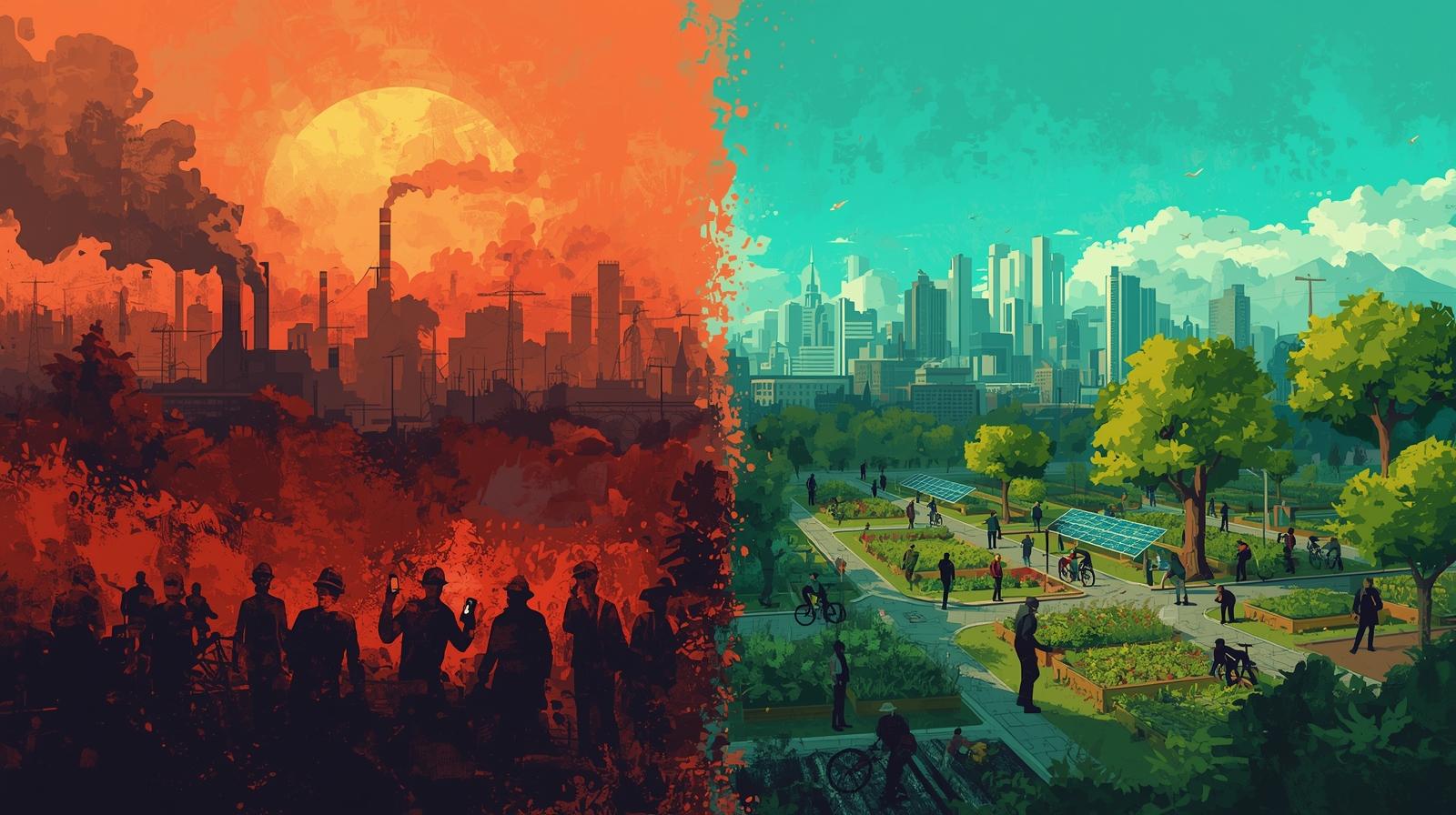
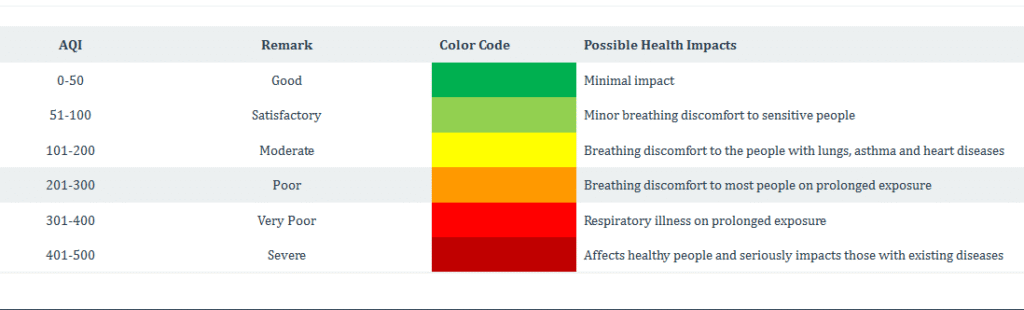
The air quality index in my city reached 400 today. At certain hours, it spiked to nearly 800—a level considered hazardous for all living beings. People around me are coughing, children are missing school, and hospitals are overflowing with respiratory cases. Yet, there’s an eerie silence. No protests, no urgent conversations, no collective demand for change. This silence raises a fundamental question: why is climate crisis awareness so weak, even among those who understand the problem?
The answer isn’t ignorance. The real issue runs deeper—it’s about consciousness, or rather, the lack of it. We’ve become a society that follows blindly, chases wealth without questioning its cost, and takes action without considering consequences. This dead consciousness is the invisible force driving us toward environmental catastrophe.
The Paradox of Knowing Without Acknowledging
Understanding something intellectually and acknowledging it with your entire being are two different things. Thousands of people know about the climate crisis. They’ve seen the documentaries, read the reports, and experienced extreme weather events firsthand. Yet, this knowledge remains superficial—trapped in their minds but never reaching their consciousness.
The most troubling aspect isn’t those who don’t know about climate change. It’s the educated, aware individuals who recognize the problem yet remain passive. They understand that climate crisis awareness matters, but they choose to listen to voices that speak against environmental action. They admire influencers and leaders who promote exactly the opposite of what science tells us.
Why does this happen? Fear plays a significant role. People who are aware become fearful to speak up because standing for climate action means standing against the mainstream culture of consumption and endless growth. It means challenging the very system that promises comfort and security. So they fall silent, becoming part of the same cycle that perpetuates environmental destruction.
The Dangerous Culture of Blind Following
We live in an age of followers. Everyone around us follows someone—a celebrity, an entrepreneur, a motivational speaker, or a political leader. But this following has transformed into obsession. People don’t just admire their idols; they want to become them, adopt their lifestyles, and replicate their success formulas without questioning the underlying values.

The focus has shifted entirely to popularity and wealth. Young people scroll through social media, watching YouTubers and influencers flaunt luxury cars, expensive watches, and exotic vacations. The message is clear: get rich, and all your problems will disappear. Climate crisis awareness takes a backseat to this narrative of material success.
These influencers occasionally talk about serious issues—corruption, food adulteration, and even climate change. They’ll make a video highlighting pollution or deforestation. But in the next breath, they’ll tell you to ignore these problems, focus on making money, and become rich enough to afford a lifestyle that insulates you from these issues.
Can’t they see the contradiction? The corruption they denounce, the food adulteration they criticize, and the environmental destruction they occasionally mention—all of these are consequences of the same blind pursuit of wealth they promote. The formula is broken, yet they keep calculating with it, expecting different results.
The Myth That Wealth Solves Everything
This belief that being rich is the solution to everything represents the ultimate failure of consciousness. Yes, money provides comfort, security, and options. But if your consciousness is dead—if you can’t distinguish right from wrong, ethical from harmful—then wealth only amplifies your capacity for destruction.
A person without consciousness, no matter how wealthy, will continue to harm nature. They’ll choose convenience over sustainability, profit over ecological balance, and short-term gains over long-term survival. Their actions contribute to climate change, which eventually harms all beings, including themselves and their children.
Being rich doesn’t automatically make you conscious or responsible. History is full of wealthy individuals and corporations that devastated ecosystems for profit. Climate crisis awareness requires more than financial resources—it demands a fundamental shift in how we perceive our relationship with the planet.
Blind Action: The Root of Climate Crisis
The climate crisis didn’t emerge from ignorance alone. It arose from blind action—the relentless pursuit of goals without considering consequences. This attitude of “achieving desires at any cost, regardless of impact on others” has become normalized in modern society.
Think of it like a mathematical equation. You can perform calculations all day, but if your formula is fundamentally wrong, your answer will always be incorrect. Similarly, a person operating without consciousness is using the wrong formula for life. They might know the formula is flawed, yet they continue using it because it promises to fulfill their immediate desires.
This is where climate crisis awareness fails most dramatically. We understand the science, we see the consequences, yet we continue with business as usual. We know that excessive consumption drives climate change, but we still buy things we don’t need. We understand that fossil fuels are destroying the planet, yet we resist transitioning to renewable energy because it seems inconvenient.
We Have No Planet B
Here’s the fundamental truth many people refuse to accept: we don’t have another Earth. We can satisfy almost any desire through alternatives—different products, different experiences, different sources of happiness. But we cannot replace this planet. If we destroy it in our lust for material satisfaction, where will we go?
Some might suggest colonizing Mars or another planet. Let’s be realistic about this fantasy. How many of us can actually afford interplanetary travel? Perhaps 0.000001% of Earth’s population—and that’s an optimistic estimate. The rest of us will be left to deal with the consequences of our collective actions.
Even if you were among the fortunate few who could afford to leave, imagine life on another planet. No oceans to swim in, no forests to walk through, no birds singing in the morning, no diversity of life that makes Earth extraordinary. You’d live in a bunker, dependent on technology for every breath, unable to communicate without machines because there’s no air to carry sound waves.
Is this the future we’re choosing? Before casually saying “we’ll just leave Earth,” truly contemplate what that means. The price of our blind consumption today is a future of isolation, scarcity, and technological dependence for those who survive.
For more wtach this: Setting Earth on fire, selling houses on Mars
The Crisis of Collective Hopelessness
Our society has bred hopelessness at multiple levels. Some people failed in school, others in college. Some didn’t get their dream job, others struggled in relationships. Many failed to fulfill the desires that society taught them to chase. This accumulated failure creates a pervasive sense of hopelessness.
But here’s what we must remember: we are more than biological machines that eat, sleep, and die while chasing blind desires. We are human beings capable of consciousness, reflection, and meaningful action. We have the capacity to change course, to ask difficult questions, and to challenge the systems that are destroying our home.
Climate crisis awareness begins with internal reflection. Before following anyone, ask yourself: what am I going after, and is it worth more than life itself? Is my consumption pattern sustainable? Are my daily choices contributing to the problem or the solution?
Inner Consciousness: The Only Real Solution
External regulations, government policies, and international agreements all have their place in addressing climate change. But without inner consciousness—without individuals waking up to the reality of our situation—these external measures will always fall short.
Inner consciousness means being aware not just intellectually but experientially. It means feeling the connection between your actions and their consequences. It means recognizing that your small daily choices—what you buy, how you travel, what you eat, how you dispose of waste—are part of the larger pattern creating the climate crisis.

When consciousness awakens, you naturally start making different choices. You don’t need external enforcement to recycle, reduce consumption, or support sustainable businesses. You do these things because you see clearly how your actions affect the whole.
This doesn’t mean becoming perfect overnight. Inner consciousness grows gradually. It starts with small moments of awareness, questions that you ask yourself, patterns that you begin to notice. Over time, this awareness transforms how you live and what you value.
Replace Blind Desires with Conscious Purpose
The problem isn’t having desires—it’s having blind desires disconnected from consciousness and consequence. What if we replaced these blind desires with conscious purposes? What if instead of chasing wealth for its own sake, we pursued meaningful work that contributes to solutions?
Fight for climate crisis awareness in whatever capacity you can. You don’t need to become a full-time activist or quit your job to make a difference. Start where you are. Make people aware in your circle. Share information that matters. Support individuals and organizations working on climate solutions. Make conscious consumption choices. Question narratives that prioritize profit over planetary health.
Our previous generations can claim ignorance. They didn’t know what we know today about climate change. If they opposed environmental action, it was often due to conditioning—they’d been part of a system that prioritized growth without questioning its ecological cost for so long that alternatives seemed unrealistic.
But we don’t have that excuse. We know. The science is clear, the evidence is overwhelming, and the consequences are already visible. What will we tell our children and grandchildren when they ask why we didn’t act despite knowing? What excuse will justify our inaction?
A Call to Conscious Action
Before every action, pause and think. Consider the ripple effects of your choices. Support people and movements working toward climate solutions, even if supporting them goes against mainstream culture. Climate crisis awareness isn’t just about understanding the problem—it’s about acting on that understanding with full consciousness.
We stand at a critical juncture. The path we choose now will determine whether future generations inherit a livable planet or a depleted, hostile environment. Our choices matter. Our consciousness matters. Our willingness to speak up, stand apart from blind following, and act with awareness matters more than we often realize.
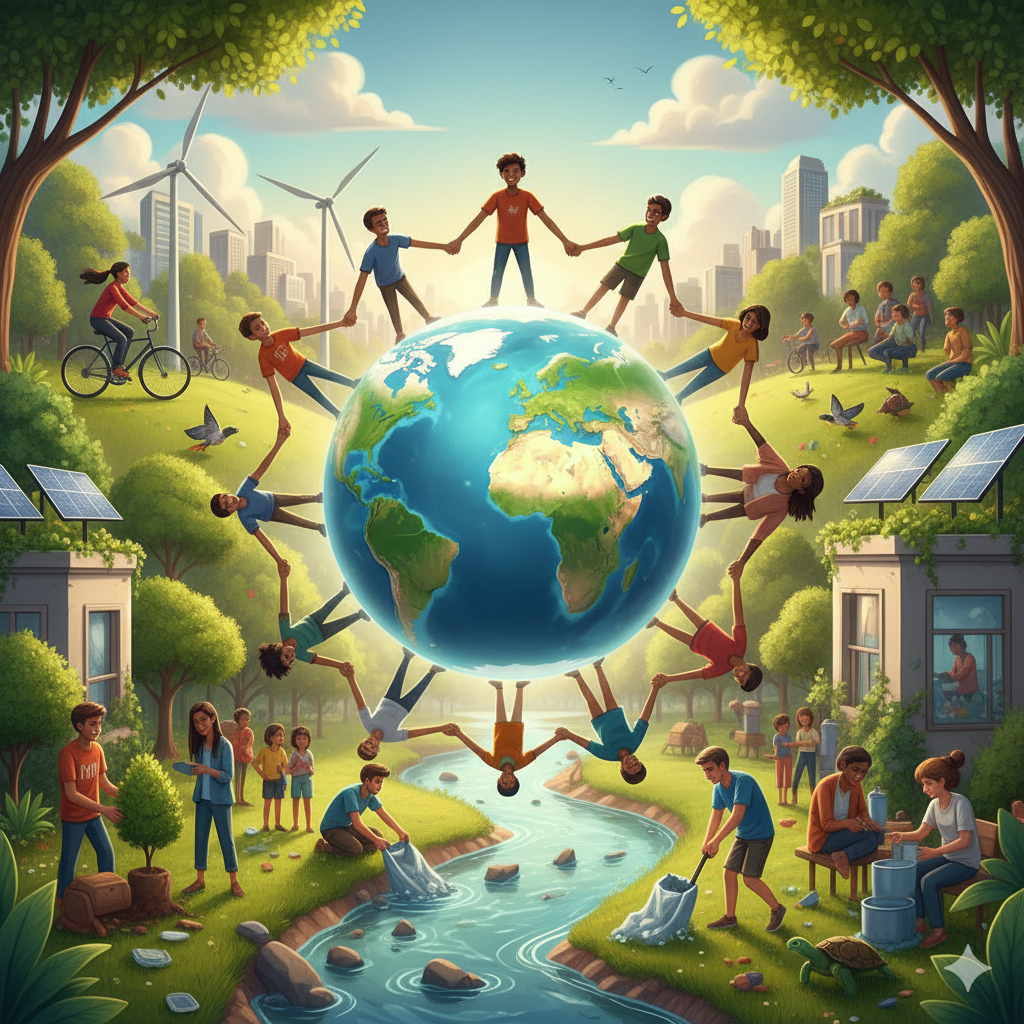
The climate crisis is ultimately a consciousness crisis. When we awaken to the interconnection of all life, when we see clearly how our actions affect the whole system, when we replace blind desires with conscious purpose—that’s when real change becomes possible. That’s when climate crisis awareness transforms from passive knowledge into active engagement.
The question isn’t whether we can make a difference. The question is whether we’ll choose to wake up before it’s too late.

